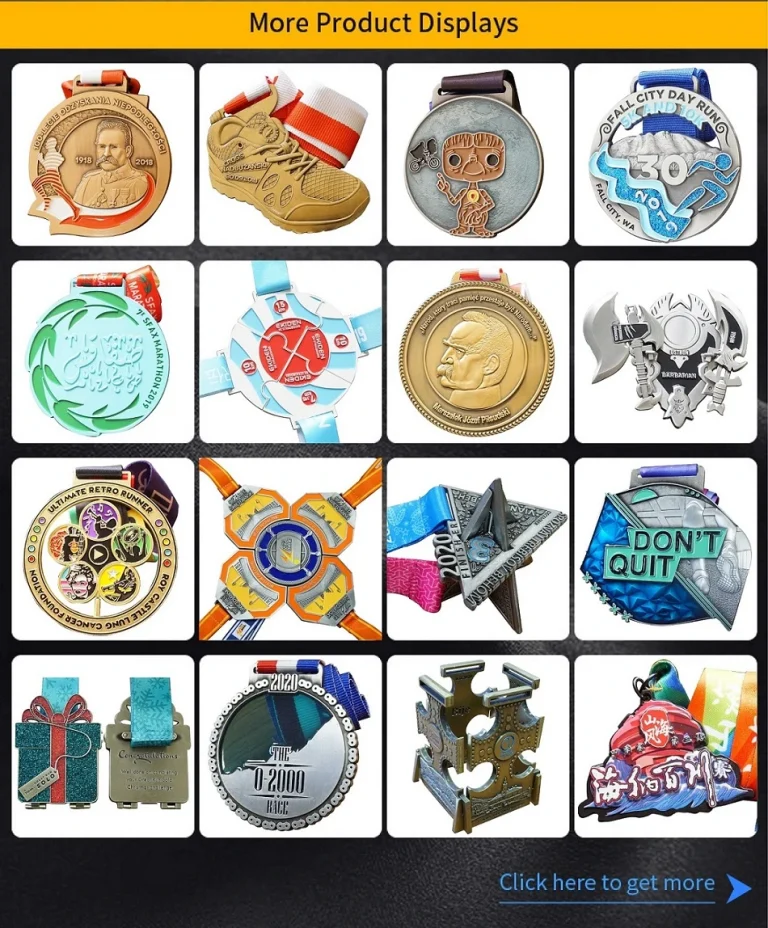
When comparing zinc alloy vs brass medals, zinc alloy is usually more flexible for complex casting while brass gives a dense traditional award feel; iron remains practical for simple high-volume designs. The best choice depends on the artwork, production process, exposure to moisture, target weight, quantity and budget—not on metal name alone.
Before comparing quotations, make sure every supplier is pricing the same diameter, thickness, plating, ribbon, packaging and delivery method. A low material price can be offset by a heavier design, additional finishing or unsuitable tooling.
Quick comparison
| Material | Main advantage | Typical limitation | Good fit |
|---|---|---|---|
| Zinc alloy | Casting freedom and deep relief | Can be heavier in large solid designs | 3D, cut-outs, irregular shapes and large race medals |
| Brass | Crisp struck detail and premium feel | Higher cost and less freedom for deep open shapes | Executive awards, service medals and classic medallions |
| Iron | Economical for simple flat designs | Needs reliable plating and dry storage | Schools, leagues and high-volume promotions |
How medal material affects the manufacturing process
Material and process must be chosen together. Zinc alloy is commonly die cast: molten alloy enters a shaped mold and can form deep levels, open areas and unusual outlines. Brass and iron are commonly die struck: pressure transfers artwork from a die into a metal blank. Die striking favors clean lines, controlled relief and traditional profiles.
The same logo can therefore require different artwork preparation. A cast version may include deeper sculpting and structural cut-outs, while a struck version may simplify levels to preserve sharp edges. Ask the production artist to explain which details change if the material changes.
When zinc alloy is the practical choice
Zinc alloy works well when the medal has an irregular silhouette, internal openings, multiple relief levels or a large diameter. It can support portraits, buildings, mascots and layered event scenes without forcing every feature into a flat stamped layout.
Large zinc medals should still be engineered for weight. Cut-outs, recessed backgrounds and controlled thickness can make a 90 mm medal comfortable to wear. Review the custom medal size and weight guide before increasing both diameter and thickness.
When brass creates the right impression
Brass is associated with traditional medallions, long-service awards and formal recognition. A well-struck brass medal can show crisp borders, lettering and low relief, with enough mass to feel substantial in hand. Polished, antique and sandblasted finishes can create strong contrast without enamel.
Choose brass when perceived value and classic construction matter more than a complex open shape. Because brass is heavier and normally more expensive than iron, confirm the final packed weight for international freight.
When iron makes sense
Iron suits straightforward 2D artwork, standard shapes and programs where quantity is more important than sculptural depth. It can be plated gold, silver or bronze and filled with enamel, so the finished appearance does not have to look inexpensive.
Its main consideration is corrosion protection. Sweat, rain and damp storage can reach exposed metal through scratches or incomplete plating. Specify consistent plating, a protective coating where appropriate, and dry individual packaging. Iron is less suitable for medals expected to live in humid gym bags for years.
Detail, relief and cut-outs
For gradual faces, animals and dimensional objects, zinc alloy provides broad 3D freedom. For formal seals, text and line art, struck brass can be exceptionally clear. Iron can hold good simple detail but is usually selected for flatter work.
Do not assume that adding more detail improves the medal. Print the proof at actual size and remove lines that become visually crowded. The decision between 2D and 3D medal relief often matters more than the base metal.
Durability is more than the base metal
Durability comes from the complete system: base material, plating preparation, plating thickness, enamel, topcoat, edge finishing and storage. A carefully plated zinc medal can perform better than a poorly finished premium blank. Brass offers useful inherent corrosion resistance, while iron depends more strongly on an intact protective surface.
For outdoor events, coastal locations or long-term archives, tell the factory how the medals will be used. Request a sample or production reference using the same finish, not merely the same metal.
How material changes cost
Iron is often the lowest-cost metal for comparable simple stamped medals. Zinc alloy is usually a balanced option because it handles complex casting efficiently. Brass is commonly positioned as a premium material. Actual quotations can reverse this order when size, tooling, thickness, labor and plating change.
Compare the full landed specification using the custom medal pricing factors. A lighter cast design may cost less to ship than an unnecessarily thick stamped one.
A buyer’s selection checklist
- Is the design flat, layered or fully sculpted?
- Does the outline require internal cut-outs?
- Will the medal be worn outdoors or stored in humid conditions?
- What weight is comfortable for the ribbon and recipient?
- Is the program a one-time event or a repeat annual order?
- Must gold, silver and bronze versions look identical?
- Are special processes such as a spinner or moving part required?
- Does the quote include plating, ribbon, packaging and freight?
Frequently asked questions
Is zinc alloy a low-quality medal material?
No. It is widely used because casting supports detailed, dimensional and custom-shaped medals. Quality depends on tooling, finishing and inspection.
Is brass always better than zinc alloy?
No. Brass is excellent for classic struck designs, while zinc alloy is often better for deep 3D relief, cut-outs and irregular shapes.
Can iron medals rust?
Unprotected iron can corrode. Proper plating, sealing, dry storage and careful handling reduce the risk.
Can one event use different metals for gold, silver and bronze awards?
It can, but using the same base metal and changing plating usually produces more consistent size, weight and detail.
Choose from the artwork, not from a label
Send the actual design, size, thickness, quantity, finish, ribbon and use environment together. MedalsChina can recommend a compatible production route after reviewing the art. Explore custom medal manufacturing and submit the specification through the custom medal inquiry form.