A 2-inch challenge coin is a versatile starting point, but the correct size follows the artwork and intended use. Compact 1.5-inch coins are easy to carry, while 2.25- to 3-inch coins provide room for portraits, long inscriptions and presentation impact. Thickness changes weight, edge space and sculptural depth, so diameter and thickness should be approved together.
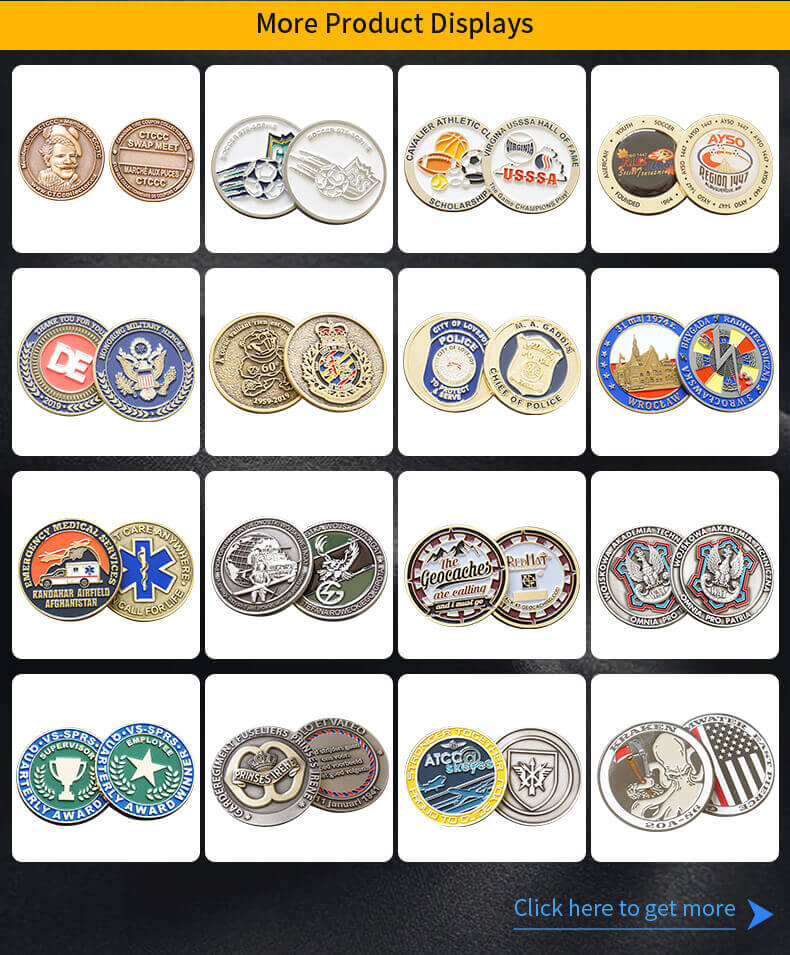
Challenge coin sizes compared
| Diameter | Typical use | Design guidance |
|---|---|---|
| 1.5 in / 38 mm | Portable membership or token coin | Use a simple logo and very short text |
| 1.75 in / 44 mm | Compact unit or corporate coin | Good for two-sided artwork with controlled detail |
| 2 in / 51 mm | General-purpose presentation coin | Balanced space, weight and cost |
| 2.25 in / 57 mm | Detailed recognition or collector coin | Supports longer border text and deeper relief |
| 2.5–3 in / 64–76 mm | Display medallion and premium presentation | Plan weight, packaging and carrying expectations |
How coin size is measured
A round coin is measured across its diameter. A custom-shaped coin is usually measured across its longest span. A narrow 2-inch dog tag and a solid 2-inch circle do not have the same metal area or weight, so quotations should show both width and height.
Confirm whether protrusions are included in the measurement. Print the outline at actual scale rather than judging a full-screen rendering.
When a 1.5-inch coin works
A 1.5-inch coin is easy to carry and economical to distribute. It suits a bold emblem, initials, a small amount of text and restrained color. It is less forgiving when the design contains a portrait, multiple logos or long circular wording.
Use the principles in challenge coin design mistakes to avoid: remove nonessential details and test every line at physical size.
Why 1.75 to 2 inches is versatile
This range balances portability with usable artwork space. A two-inch coin can carry a central logo, border text and a meaningful reverse without becoming a display-only object. It also leaves enough edge for reeding, engraving or decorative cuts.
If recipients will carry the coin daily, compare paper circles in a pocket. A quarter-inch increase affects area and weight more than it appears on a ruler.
When to choose 2.25 inches or larger
Larger coins support complex scenes, several departments, sculpted portraits and readable presentation messages. They can feel impressive in a box but may be inconvenient in a wallet or pocket. Decide whether the piece is intended to be carried, displayed or presented ceremonially.
Large designs benefit from cut-outs or controlled relief to manage mass. They also need a box, stand or capsule sized to the final diameter.
Thickness and edge options
Around 3 to 4 mm is common for many challenge coins, but there is no universal requirement. Thinner coins feel lighter and leave less room for edge lettering. Thicker coins provide a substantial profile and allow deeper relief, yet add material and freight weight.
Choose the edge at the same time. See the comparison of standard, reeded, rope and diamond-cut coin edges.
How size affects artwork readability
Border text consumes circumference and must clear the rim. Faces need enough area for recognizable eyes, nose and mouth. Small reversed lettering can close during polishing. Increasing diameter helps, but simplification is often more effective than scaling everything up.
Place the priority message on the front and secondary details on the reverse. Ask for minimum text and line recommendations for the selected process.
2D versus 3D relief at different sizes
2D relief is efficient for typography, flags, logos and graphic emblems. 3D relief is useful for faces, vehicles, buildings and sculptural subjects. A small 3D coin may need exaggerated features, while a larger diameter allows more gradual transitions.
Do not use extra thickness solely to imitate 3D. Relief depth, model quality and lighting determine the final effect.
Weight, shipping and presentation
Weight rises with diameter, thickness and the percentage of solid metal. For a large order, a few grams per coin can materially change carton weight and freight. Ask for an estimated unit weight before approval.
Match packaging to the purpose: PVC pouches for distribution, capsules for protection, stands for display and boxes for formal presentation. The packaging guide also applies to coin projects.
Size approval checklist
- Width and height are shown in millimeters and inches.
- Thickness excludes or includes raised relief as stated.
- The proof has been printed at 100 percent scale.
- Smallest text and gaps meet production limits.
- Edge treatment fits the available thickness.
- Estimated unit weight is acceptable.
- Pouch, capsule, box or stand fits the coin.
- Freight is quoted using the final specification.
Frequently asked questions
What is the most common challenge coin size?
Two inches is a widely used general-purpose size, but artwork and carrying expectations should determine the final diameter.
Is a thicker challenge coin better?
Not automatically. Extra thickness adds edge area, relief potential and weight, but it also increases cost and may reduce portability.
How are custom-shaped coins measured?
They are normally measured across the two farthest points, though the quotation should also state width, height and thickness.
Can small text be fixed by making the coin larger?
Sometimes, but editing the wording and increasing contrast often gives a cleaner result than simply enlarging the coin.
Approve a physical-scale specification
Send the artwork, expected use, quantity, diameter range, thickness, edge, plating and packaging together. Explore custom challenge coin options and request a size recommendation through the MedalsChina inquiry form.