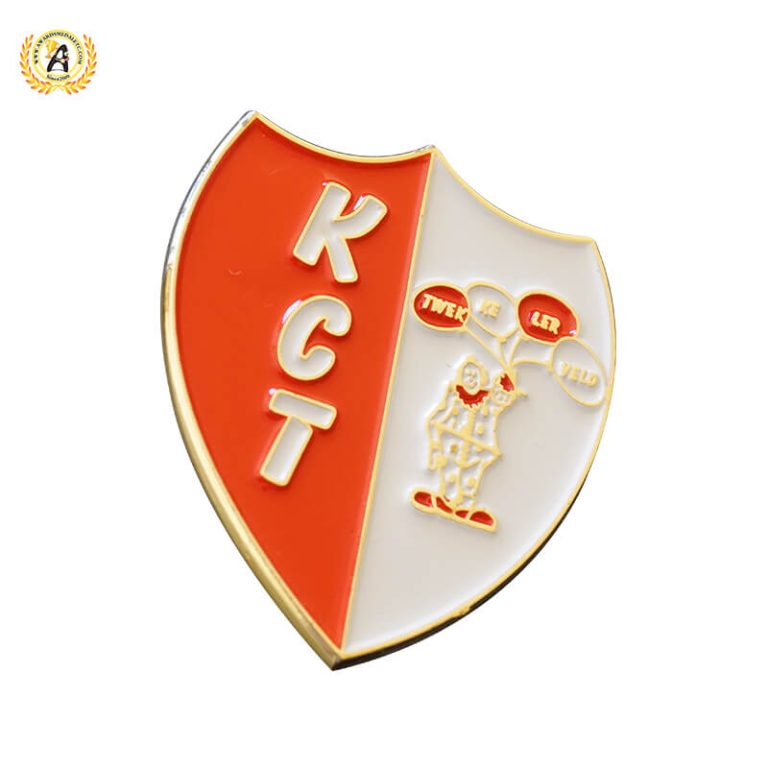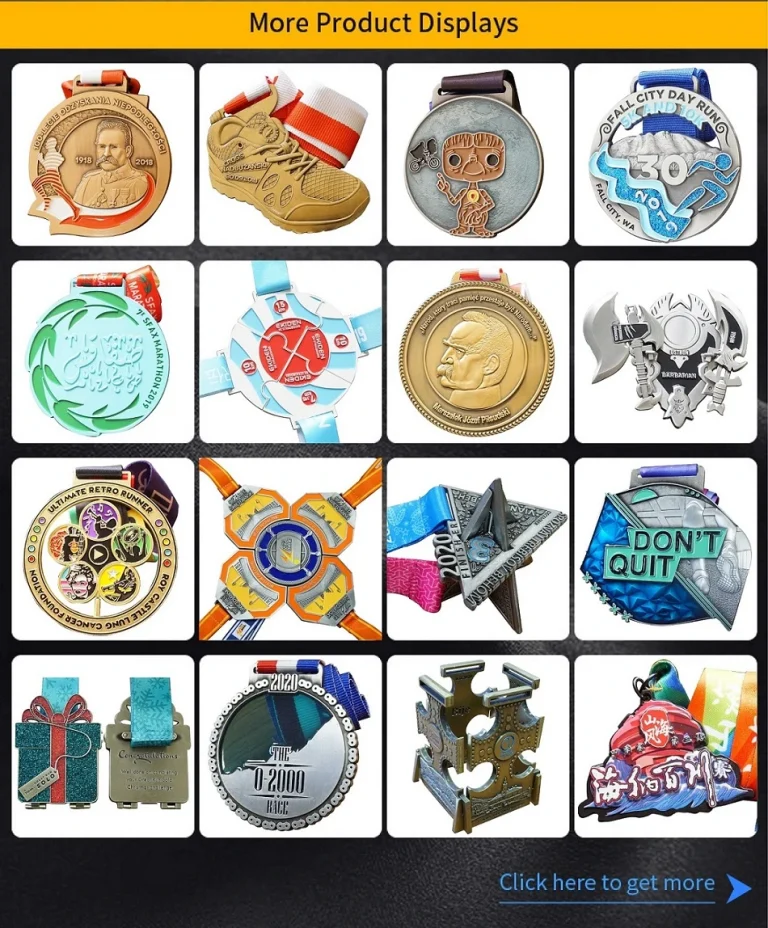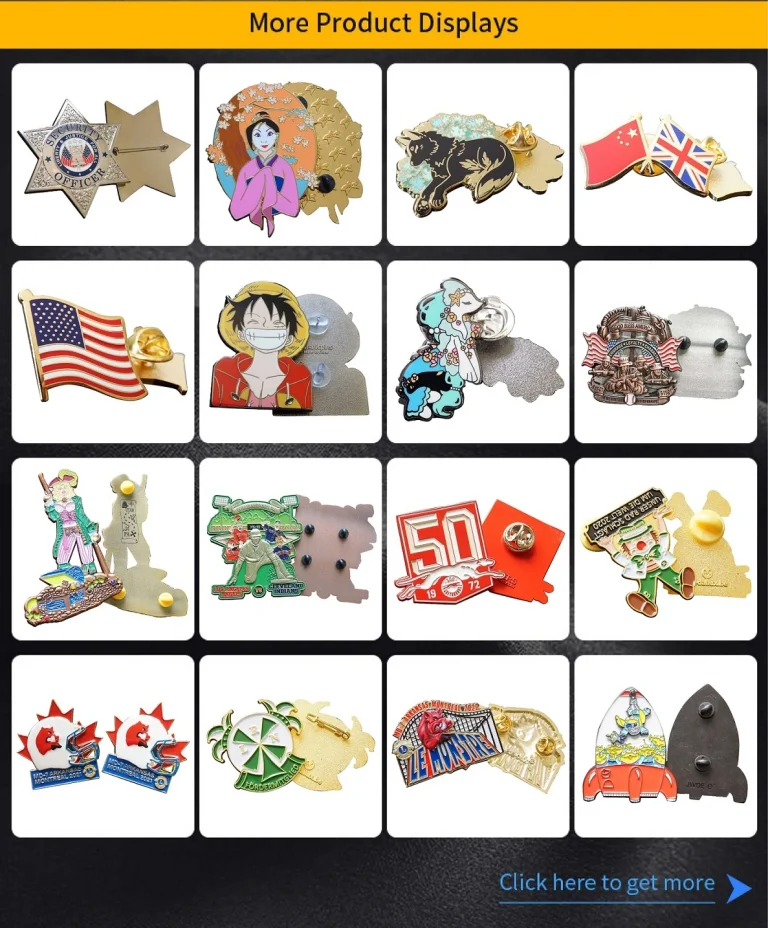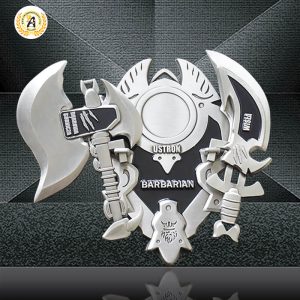
A medal finish is the treatment that gives exposed metal its final color, reflection and contrast. Popular custom medal finishes include polished gold, silver or copper; antique gold, silver or bronze; matte or satin plating; black nickel; and dual plating.
The finish should support the artwork. A reflective surface suits clean logos and bright enamel, while an antique finish reveals texture and 3D relief. Choosing by a small online swatch alone can produce an unexpected result.
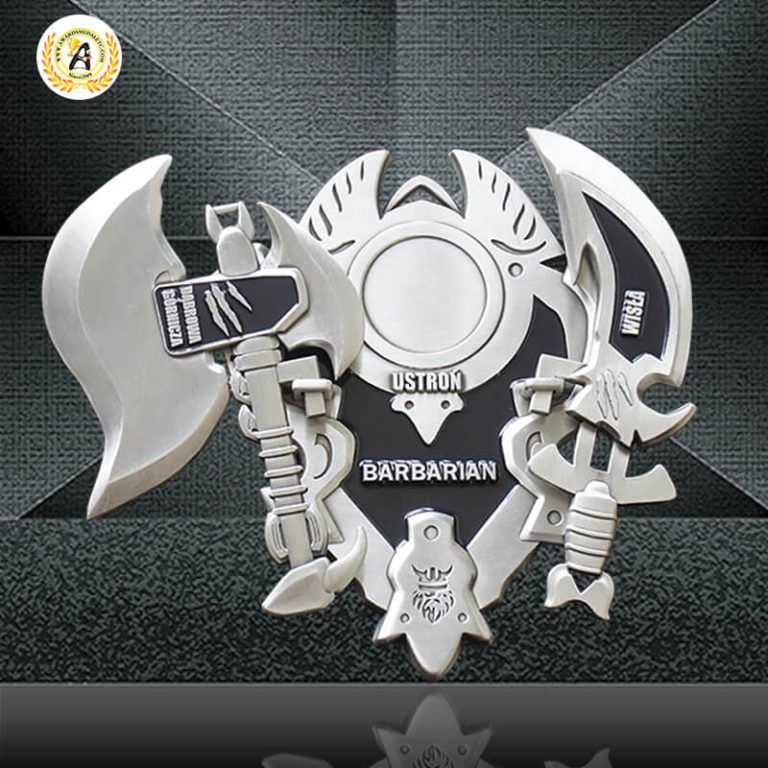
Custom medal finish comparison
| Finish | Appearance | Best for |
|---|---|---|
| Polished gold, silver or copper | Bright and reflective | Modern awards, colorful enamel, clean logos |
| Antique gold, silver or bronze | Dark recesses with highlighted raised areas | 3D relief, heritage themes, detailed metalwork |
| Matte or satin | Low-glare, soft reflection | Corporate recognition and understated designs |
| Black nickel | Dark, glossy metal tone | Contemporary designs and bright contrasting colors |
| Dual plating | Two metal colors on one medal | Premium emphasis and distinct foreground elements |
Polished finishes
Polished plating creates a bright, mirror-like surface on exposed metal. Gold communicates celebration and first-place recognition; silver feels clean and contemporary; copper adds warmth. These are not normally solid precious metals. The base medal is plated to create the chosen surface appearance.
Polished finishes work best when metal areas are broad enough to reflect light. They pair well with soft or hard enamel, especially when the design needs strong separation between color and metal borders.
Advantages
- Bright presentation under event and studio lighting.
- Strong contrast with colored enamel.
- Familiar gold, silver and bronze award language.
- Suitable for simple logos and geometric borders.
Considerations
Highly reflective metal can show fingerprints and may make very fine detail harder to photograph. A polished background behind raised polished text also creates limited contrast, so use texture, color or level changes to separate them.
Antique finishes
An antique finish uses darker color in recessed areas while raised surfaces are relieved or polished. The result makes sculpted detail easier to read. Antique silver is widely used for architectural scenes and military-style imagery, while antique gold or bronze can create a historic, ceremonial character.
Antique plating is especially effective on 3D medals because shadows remain visible even under flat lighting. It can also make a large medal look less flashy and more substantial.
When antique is the better choice
- Portraits and sculpted faces.
- Buildings, landscapes and historic landmarks.
- Dense linework without extensive enamel.
- Vintage, military or heritage themes.
Matte and satin finishes
Matte or satin metal reflects less light than a polished surface. It creates an understated, controlled appearance and photographs with fewer hotspots. Corporate service medals and premium recognition pieces often benefit from this restrained finish.
Because matte surfaces provide less sparkle, the design needs strong shape, typography and proportion. A selective polished edge or raised logo can create contrast without changing the overall metal color.
Black nickel and dark finishes
Black nickel creates a dark, glossy framework around enamel colors. Neon, white, red and other saturated colors can stand out strongly against it. It is often chosen for gaming, night races, music, motorsport and modern brand identities.
Remember that dark metal changes the overall mood. Thin black outlines may visually merge with dark enamel, so check the proof for sufficient separation.
Dual plating
Dual plating combines two metal colors, such as gold and silver, on one medal. It can separate a central icon from the border, highlight a winner element or give a premium collector look.
The design must include clear boundaries between plating areas. Dual plating adds production steps, so it should emphasize an important feature rather than decorate every small detail.
How enamel changes the finish
Metal finish and enamel should be approved together. Soft enamel leaves metal lines raised above recessed color. Hard enamel is polished flatter with the metal and produces a smoother surface. Transparent enamel allows texture beneath the color to remain visible, while opaque enamel covers it.
For an antique medal, using too much opaque color can hide the texture that justified the antique finish. For a polished medal, strategic color can prevent large reflective areas from competing with the main logo.
Front and back finishes
Most medals use the same plating on both sides, but the two faces can have different textures and levels. A polished front may carry event branding, while a recessed back can hold a message or sponsor names. Confirm whether engraving will be applied before choosing the finish, as engraving contrast varies by surface.
How to choose a finish
- Identify the design’s focal point.
- Decide whether color or metal relief should dominate.
- Match the finish to the event’s brand and tone.
- Review a rendering in realistic light, not only a flat color swatch.
- Request a physical sample when color and reflectivity are critical.
Frequently asked questions
Which medal finish shows 3D detail best?
Antique finishes generally reveal relief most clearly because dark recesses contrast with the raised surfaces.
Which finish is best for colorful sports medals?
Polished gold, silver, copper or black nickel can all work. The best option depends on the event palette and exposed metal around the enamel.
Can one medal use polished and matte areas?
Yes. Selective polishing can highlight a logo, border or raised element against a satin field, subject to the mold and finishing process.
Final checklist
Approve the exact plating name, enamel type, surface texture and front/back treatment in writing. Compare physical samples when terminology differs. Browse the MedalsChina catalog or submit artwork through the custom inquiry page.