Most everyday lapel pins fall between 0.75 and 1.25 inches at their longest dimension. A simple logo can work at 0.5 to 0.75 inch, while detailed art, trading pins and backpack designs often need 1.25 to 2 inches. The right size depends on the smallest text and lines, the fabric, expected viewing distance, backing arrangement and budget.
Pin size is normally measured across the longest dimension, not by area. A 1.25-inch horizontal pin and a 1.25-inch square pin can have very different weight and usable artwork space.
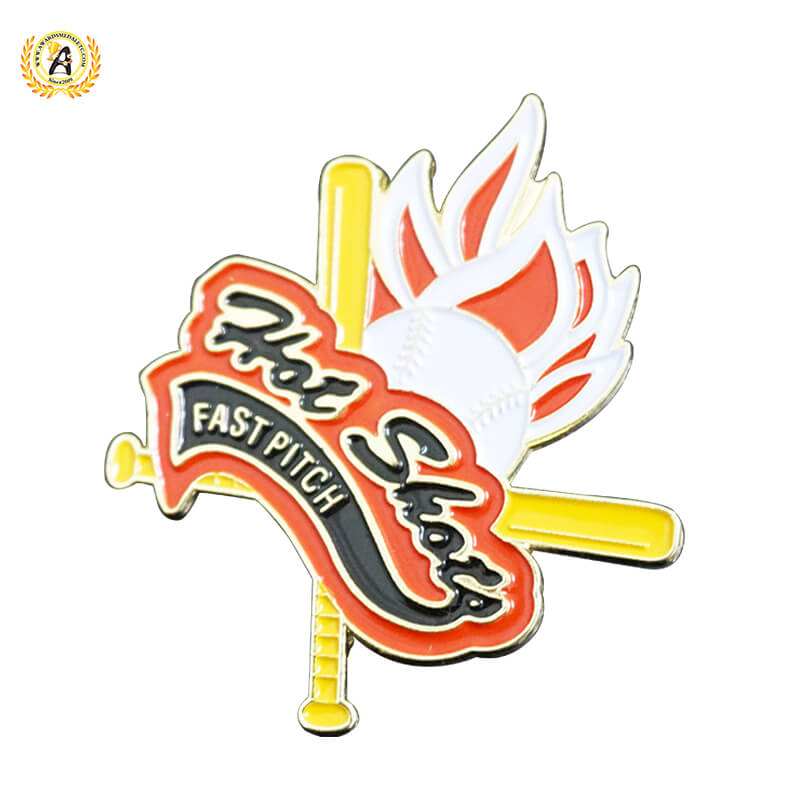
Lapel pin sizes compared
| Longest dimension | Typical use | Design guidance |
|---|---|---|
| 0.5 in / 12.7 mm | Tiny icons, tie tacks, subtle branding | Use one bold symbol and almost no text |
| 0.75 in / 19.1 mm | Suit lapels, staff pins, small logos | Best for simple artwork |
| 1 in / 25.4 mm | Corporate, club and promotional pins | Versatile balance of detail and comfort |
| 1.25 in / 31.8 mm | Collectibles, school and event pins | Allows more text and color areas |
| 1.5 in / 38.1 mm | Trading pins, backpacks, detailed art | Consider two posts to prevent rotation |
| 1.75–2 in / 44.5–50.8 mm | Statement pieces and complex designs | Check weight, thickness and packaging |
How lapel pin size is measured
Factories usually price and describe a custom pin by its longest dimension. For a rectangle measuring 1.5 by 0.5 inches, the quoted size is 1.5 inches. Protruding shapes, external rings and some attachments may affect the overall measurement.
Ask for dimensions in both millimeters and inches and confirm whether the measurement includes an outer border. The digital proof should show width and height, not only one generic size.
0.5-inch pins: where they work
A half-inch pin is discreet and lightweight. It suits a single initial, geometric mark, small service symbol or tie-tack style accessory. Fine slogans, several enamel colors and photographic details will not reproduce well at this scale.
Metal line width and enamel fill area become critical. Printed production may hold different details than enamel, but the result still needs to be visible without magnification.
0.75-inch pins: subtle everyday wear
Three-quarter-inch pins are common for formal clothing, employee identification and simple brand marks. They sit comfortably on a lapel or collar without dominating the garment.
Use short text, a recognizable silhouette and strong contrast. One post is usually sufficient for a balanced lightweight shape, although a long horizontal design may still rotate.
1-inch pins: the versatile starting point
One inch is a practical default for corporate programs, clubs, events and merchandise. It offers enough room for a logo and limited wording while remaining comfortable on shirts, jackets and lanyards.
If you are unsure, print the one-inch proof at actual size. Compare it with a 1.25-inch version before requesting a quote. The small increase can improve legibility substantially.
1.25-inch pins: more art and stronger visibility
At 1.25 inches, designers can include more separate color areas, a short border inscription or a more detailed mascot. This size works well for school pins, membership programs and retail collectibles.
Evaluate the area, not only the longest measurement. A filled circular pin is heavier than a narrow wordmark of the same quoted size. Match the post placement to the center of mass.
1.5-inch pins: trading and backpack designs
A 1.5-inch pin is visible from a greater distance and gives complex artwork room to breathe. It is popular for trading, festivals, backpacks and character designs. On thin clothing, the additional weight can cause sagging.
Two posts often prevent a wide pin from rotating and spread the load. Review the lapel pin backing guide before approving the reverse layout.
1.75- to 2-inch pins: statement pieces
Large pins can present layered scenes, several names or detailed collectible artwork. They also require more metal and enamel, larger packaging and careful backing placement. A large pin is not automatically more premium if the art looks empty.
For clothing, create a paper mock-up and pin it temporarily to similar fabric. For backpacks or display boards, confirm the design does not interfere with zippers, seams or straps.
Match size to the intended surface
| Placement | Starting size | Important consideration |
|---|---|---|
| Suit lapel | 0.5–1 in | Weight and fabric puncture |
| Uniform or employee badge | 0.75–1.25 in | Logo recognition and dress code |
| Hat | 0.75–1.25 in | Curved surface and post length |
| Backpack | 1.25–2 in | Locking backs and friction |
| Trading pin | 1.5–2 in | Visibility and collectible features |
| Lanyard | 0.75–1 in | Keep the pin light |
Artwork detail determines minimum size
Small lettering, separate enamel areas and thin metal lines require space. If the artwork cannot be simplified, increase the size or use a printed process for gradients and photographic detail. The guide to hard and soft enamel pins explains how surface style affects the design.
Do not enlarge low-resolution art and assume detail will improve. Send vector files where possible and approve a production-ready proof.
Weight, posts and rotation
Wide, tall or off-center pins can rotate around a single post. Two posts stabilize the design and distribute weight. A magnetic backing avoids puncturing delicate garments but may not hold a heavy pin through thick fabric.
Post length, backing diameter and welding position should appear on the reverse proof. A large pin with poorly placed hardware can feel less secure than a smaller pin.
How size affects price and packaging
Larger pins generally use more material and may require higher tooling, unit and freight costs. Special shapes, thickness, plating, colors, backing and packaging also affect price. Compare complete specifications rather than size alone.
For retail pins, allow enough card area around the product and verify that the card and bag fit the final width, height and post arrangement.
Frequently asked questions
What is the most popular lapel pin size?
About one inch is a versatile starting point for many corporate and promotional pins. The best size still depends on artwork detail and where it will be worn.
Is a 1.5-inch pin too large for clothing?
Not necessarily, but weight and fabric matter. Test a paper mock-up and consider two posts or a brooch-style fitting for wide designs.
Can a detailed logo fit on a 0.75-inch pin?
Only if it is simplified. Tiny text and narrow gaps may need to be removed, or the design should be enlarged or printed.
Should pin thickness increase with size?
Sometimes. The factory should recommend thickness based on overall area, shape and material so that the pin remains rigid without unnecessary weight.
Approve the size at actual scale
Start with the intended garment or display surface, then balance detail, visibility, weight and budget. Browse popular lapel pin styles, review custom lapel pin manufacturing options and submit the artwork through the inquiry form for a size recommendation.